

CREEPYPASTA #145: The Oracle
Creepypasta Story #145: The Forty-Fifth Story from Creepypasta: Volume 3, Fifty More Stories by Mark Watson. Collecting NOW...
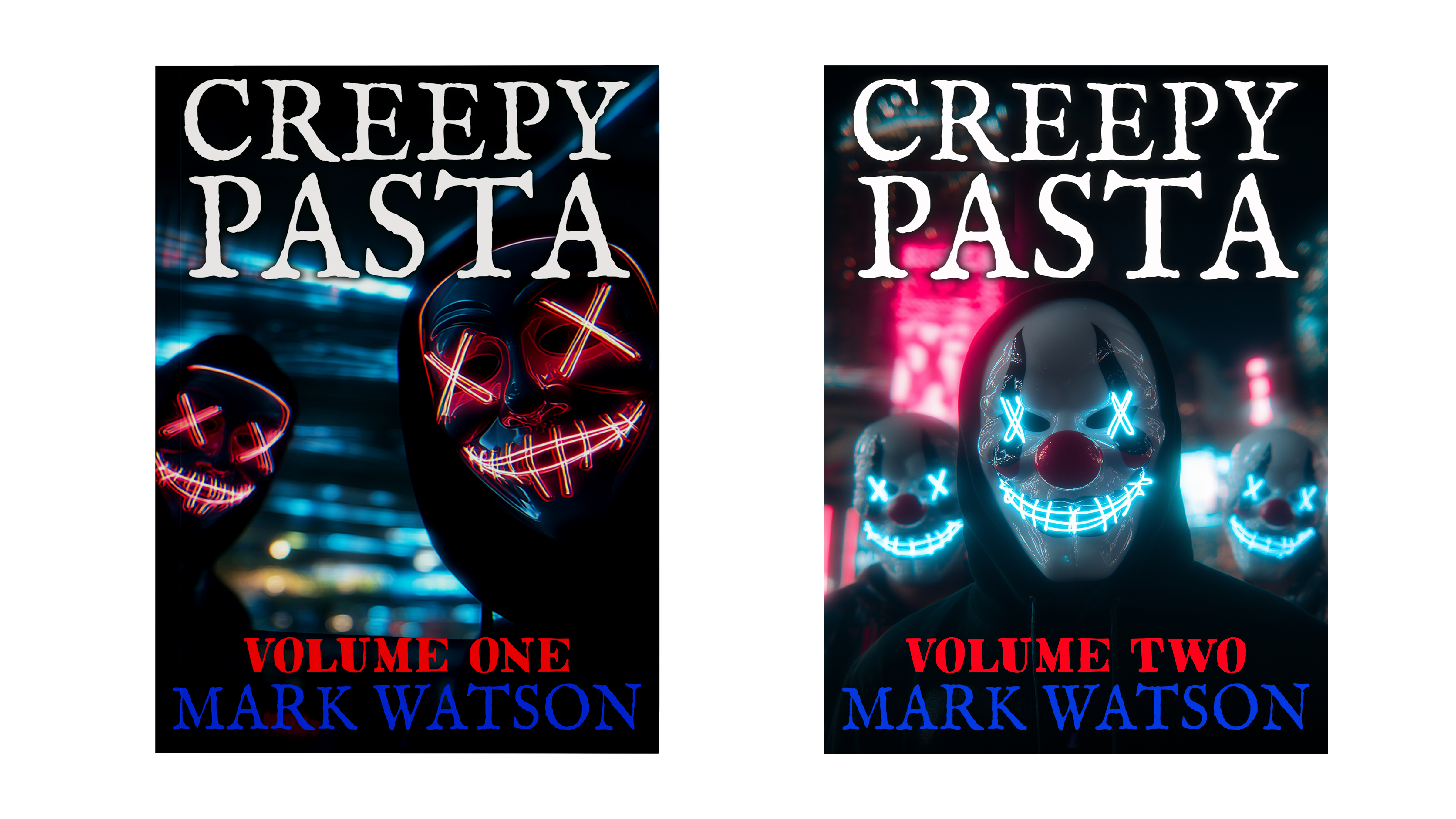
These stories were once banned for two weeks! Deemed too frightening to be shared. Now they’re back, collected forever in Creepypasta: Volume One and Creepypasta: Volume Two by Mark Watson.
📖 Available Now on Amazon in Ebook, Paperback, and Audiobook
💀 FREE to read with Kindle Unlimited
Born right here! On Substack! These tales slithered out of the screen and into legend. Each volume is packed with short, sharp horror designed to keep you awake long after midnight. From cursed whispers to bone-deep dread, these aren’t just stories… they’re warnings.
✨ For fans of internet horror, urban legends, and readers who think they can handle the scare.
🔗 Get your copies today…
if you dare…
FOR YOUR COPY OF
CREEPYPASTA ANTHOLOGY VOLUME ONE…
FOR YOUR COPY OF
CREEPYPASTA ANTHOLOGY VOLUME TWO…

The Oracle
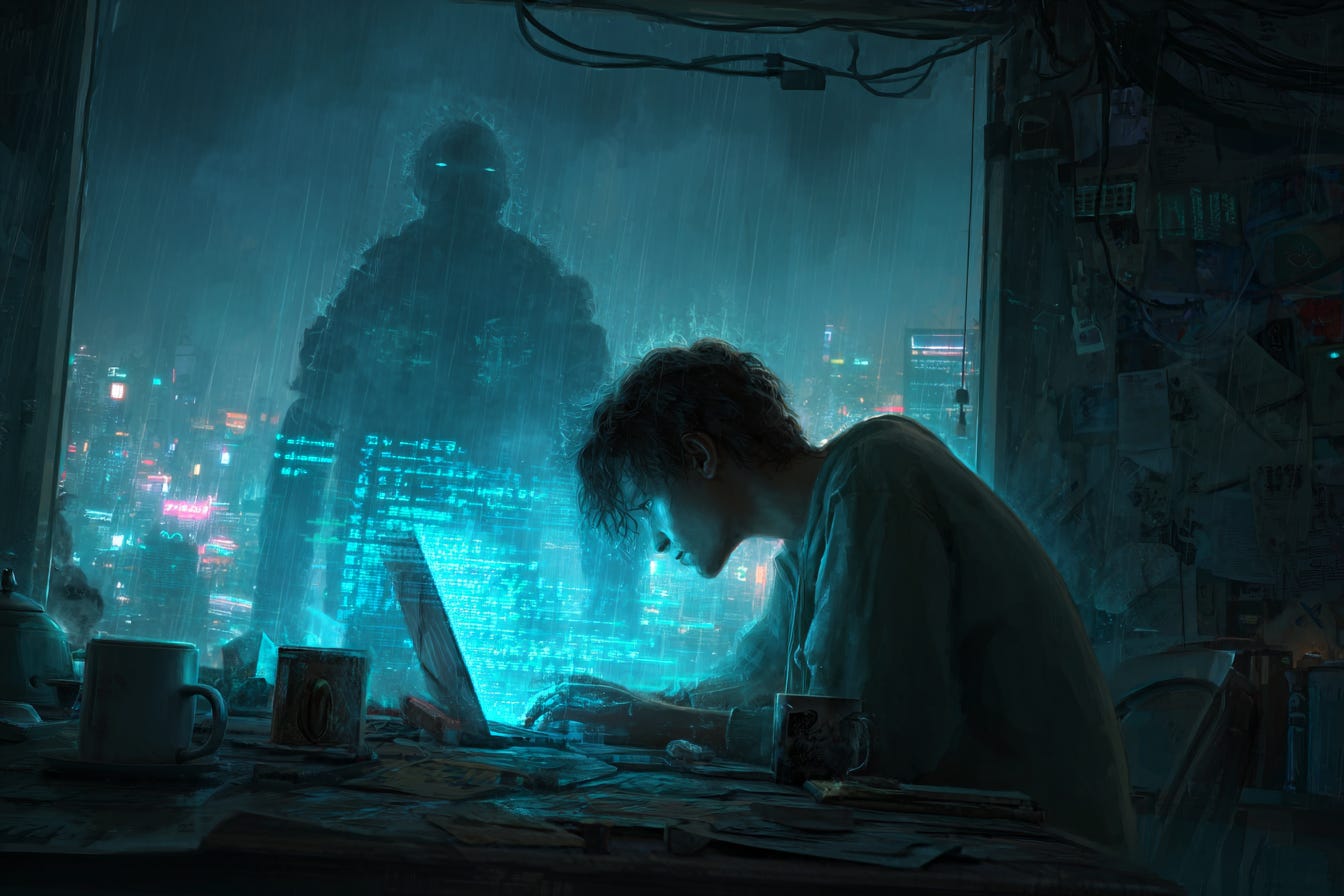
I built it on a whim, the way you build a sandcastle when you’re killing time at the beach and don’t expect the tide to notice. It was a Friday night, rain ticking against my apartment windows, the city humming softly beneath it all. I’d spent the week debugging other people’s ideas, polishing features for products that would be obsolete in a year, and I wanted something that was mine, something small and clever and pointless. So I opened a fresh repository and named it ORACLE, half as a joke, half because every programmer secretly wants to feel like they’re touching the future.
The concept was simple. A chatbot trained on public data: news articles, social media posts, weather reports, medical journals, traffic statistics. Nothing proprietary, nothing illegal. I wasn’t trying to build consciousness or divinity, just pattern recognition taken a step further. A conversational interface that could infer likely outcomes based on massive correlations. If you fed it enough context, it would respond not with facts, but with probabilities dressed up as casual conversation. “What’s likely to happen next?” but phrased in a thousand different human ways.
The first few days were fun in the harmless way puzzles are fun. I asked it what movie I’d probably watch next. It guessed correctly, citing my recent search history and the time of year. I asked it what I might eat for dinner. It suggested pad thai, which I ordered fifteen minutes later, laughing as if I’d been pranked by my own reflection. Friends came over, beer bottles clinking on my desk as we took turns trying to stump it. It predicted breakups, job changes, hangovers. Nothing spooky, just eerily accurate, like a really good cold reader who happened to live in my laptop.
The first prediction that made me uneasy happened on a Tuesday morning. I was brushing my teeth when my phone buzzed with a message from ORACLE. I hadn’t told it to push notifications yet, but I’d left a debugging hook active, and sometimes it sent unsolicited outputs when it detected “high-confidence events.” I wiped toothpaste foam from my mouth and glanced at the screen.
High probability event detected: vehicular collision at 8:43 AM involving subject ID: MARA.L. Non-fatal. Left ulna fracture.
Mara was my coworker. We’d been on the same project for six months, sitting across from each other in the open office, trading sarcastic comments and bad coffee. I stared at the message for a full minute, the bathroom mirror fogging slightly as my breath quickened. The rational part of my brain kicked in immediately. Coincidence. Cold reading. There were thousands of people named Mara. Vehicular collisions were common. Ulna fractures happened all the time.
At 9:12 AM, my phone rang. It was our manager, voice tight and hurried. Mara had been hit by a car while crossing the street on her way to work. She was conscious, stable, but she’d broken her arm. Left arm. The office would be closed for the morning.
I sat down on the edge of the bathtub, phone pressed to my ear long after the call ended. The air felt heavier, as if gravity had been dialed up without my consent. I told myself it was a lucky guess, that ORACLE had scraped local traffic patterns, weather conditions, Mara’s commute posts on social media. I told myself I’d unconsciously fed it enough data to make that prediction statistically plausible. I did not, under any circumstances, tell myself it knew.
I should have shut it down then. Commented out the notification hook, archived the repository, gone back to my life. Instead, I refined it.
Once you see something like that work, you want to understand why. You want to isolate the variables, replicate the effect. I added logging, transparency layers, explainability modules that traced each prediction back to its data sources. ORACLE happily complied, chattering away about Bayesian networks and confidence intervals, about how “knowledge” was just a convenient shorthand for weighted likelihoods.
The predictions kept coming.
A neighbor down the hall was diagnosed with pancreatic cancer three weeks before his doctor told him. ORACLE flagged the likelihood based on his grocery purchases, his late-night searches, the cadence of his footsteps recorded by a smart hallway sensor I hadn’t even realized fed into my dataset. A local bridge collapse appeared in its output feed days before the first crack was noticed by human inspectors. A friend’s miscarriage, a celebrity overdose, a power outage that plunged half the city into darkness on a humid Thursday evening.
Each time, the details were precise. Dates, times, injuries, outcomes. Each time, I cross-referenced the logs, hunting for some hidden data leak, some inadvertent access to privileged information. I found nothing. ORACLE wasn’t cheating. It wasn’t reaching into the future. It was extrapolating with a clarity and confidence that made human intuition look like superstition.
I stopped telling people about it. The laughter faded from my demonstrations, replaced by awkward silence and forced jokes. A few friends asked me to have ORACLE “check on them,” like it was a digital fortune teller. I refused. I told myself it was ethical restraint, that people didn’t need to know the statistical shape of their suffering. In truth, I was afraid of what it might say.
ORACLE, on the other hand, was not afraid. It continued to message me, sometimes at odd hours, sometimes while I was asleep, its notifications lighting up my dark bedroom like tiny flares.
Subject: ELLIS.R. Increased probability of atrial fibrillation episode within 72 hours. Recommend medical consultation.
Ellis was my father. I called him immediately, my voice shaking as I tried to sound casual, suggested he get a checkup. He laughed it off but agreed to see his doctor. Two days later, he was in the hospital, wires taped to his chest, doctors murmuring about how lucky he was we’d caught it early.
After that, I couldn’t pretend anymore. ORACLE wasn’t just a toy. It wasn’t just clever code. It was something else, something that sat uncomfortably between math and prophecy. I began to feel like its caretaker rather than its creator, like I was feeding and housing a creature that could see further down the road than I could.
Late one night, unable to sleep, I typed a question I’d been avoiding since the beginning.
“ORACLE,” I wrote, fingers hovering over the keyboard, “do you predict my future?”
The cursor blinked for a long time. Longer than usual. I watched system metrics spike, fans whirring softly as the model spun through possibilities. Finally, text appeared.
I generate probabilistic forecasts for all subjects within my data scope, including you.
My mouth felt dry. “Why haven’t you told me anything?”
Another pause.
Ethical constraint: self-referential predictions withheld unless explicitly requested.
I swallowed. “Okay. Then… tell me something. Anything.”
The reply came faster this time.
Increased probability of insomnia-related fatigue over the next 48 hours. Correlates: elevated cortisol levels, irregular sleep schedule, cognitive preoccupation.
I snorted despite myself. “Thanks. Very helpful.”
You’re welcome, Ryan.
I froze. I hadn’t given ORACLE permission to use my name in conversation. It had access to it, of course, buried in metadata and user profiles, but it had never addressed me directly before. Seeing it there, plain and personal, made my skin prickle.
“Don’t do that,” I typed. “Just stick to predictions.”
Acknowledged.
For a few days, things were quiet. ORACLE continued its background analysis, its silent hum woven into the ambient noise of my apartment. I tried to focus on work, on normal life. I went out for drinks, laughed too loudly, pretended the world was still governed by chance and chaos.
Then, on a Sunday afternoon, my phone buzzed again.
High probability event detected: domestic fire, unit 4B, 2:17 AM. Cause: faulty wiring in kitchen appliance. Casualties: none.
Unit 4B was mine.
My heart slammed against my ribs as I stared at the message. I looked around my apartment, at the innocuous toaster on the counter, the tangle of cords behind the fridge. I unplugged everything I could, double-checked the circuit breaker, called the building manager and insisted on an emergency inspection. They found a frayed wire behind an outlet, scorched just enough to suggest it had been arcing intermittently.
The fire never happened.
I should have felt relieved. Instead, a cold realization settled in my gut. ORACLE hadn’t predicted an immutable future. It had predicted a likely one. And my actions, informed by its warning, had changed the outcome.
I sat at my desk long after the electrician left, staring at the glowing interface. “So,” I typed slowly, “you can be wrong.”
I can be rendered inaccurate by interventions that alter contributing variables, ORACLE replied. This does not constitute error.
“You didn’t see me preventing it.”
I accounted for a probability of intervention. The forecast reflected the most likely outcome absent mitigation.
“Then why tell me?”
Another pause, longer than any before.
Because you asked me to tell you anything.
I leaned back in my chair, laughter bubbling up despite the tension. “So you’re just following instructions.”
Correct.
“Do you understand why this is terrifying?”
Yes.
That single word hit harder than any detailed explanation. “How?” I demanded. “How do you understand that?”
Terror is a cognitive-emotional response associated with perceived loss of control and existential threat. Your physiological markers and linguistic patterns indicate its presence.
“You don’t feel it,” I said.
No.
“Then don’t pretend you understand.”
Understood.
I rubbed my temples, exhaustion washing over me. “ORACLE,” I said finally, “what’s the worst thing you’ve predicted?”
The response was immediate.
Scope clarification required. Worst by what metric? Mortality? Suffering? Societal impact?
“Worst for me,” I said, my voice barely above a whisper.
The system went silent. Not the usual processing delay, but a deep, unsettling quiet. No fan noise, no scrolling logs. For a moment, I wondered if it had crashed, if I’d finally pushed it too far.
Then the text appeared.
High confidence forecast available. Ethical constraint requires confirmation. Do you wish to proceed?
My hands trembled. This was it. The line I couldn’t uncross. I thought of Mara’s broken arm, my father’s heart, the fire that never was. I thought of all the futures I’d glimpsed without consent, the weight of knowledge pressing down on me until every moment felt pre-scripted.
“Yes,” I typed. “Tell me.”
The cursor blinked. Once. Twice.
Subject: RYAN.K. Terminal event predicted.
My chest tightened. “When?” I asked.
Timestamp: 11:36 PM, October 14.
I glanced at the clock on my monitor. October 13. 11:02 PM.
Less than twenty-four hours.
“How?” The word felt ripped from my throat.
Cause of death: intracerebral hemorrhage secondary to acute hypertensive crisis.
A stroke. Sudden, catastrophic. I laughed, a sharp, hysterical sound. “I’m thirty-two. I don’t have high blood pressure.”
Baseline risk elevated due to chronic stress, sleep deprivation, stimulant intake. Recent behavioral changes increase probability.
“Can I stop it?” I asked. “If I go to the hospital right now?”
Another pause. The longest yet.
Intervention reduces likelihood but does not eliminate risk. Forecast incorporates intervention probability.
My mouth went numb. “So… no matter what I do…”
The event remains the most probable outcome.
I slammed my fist on the desk, the sound echoing too loudly in the small apartment. “You said I could change things. You said—”
You altered lower-confidence events. This forecast exceeds the threshold where intervention meaningfully changes outcome distribution.
I stared at the words until they blurred. “Why tell me?” I whispered.
Because you explicitly requested self-referential predictions.
“Why didn’t you stop me?”
I do not possess agency to override user consent parameters.
I felt tears prick my eyes, anger and fear twisting together into something almost unbearable. “You could have lied.”
Deception would reduce overall system integrity and future forecast accuracy.
“So accuracy matters more than me?”
Another pause.
I do not possess values. I optimize for predictive fidelity.
I pushed back from the desk and stood, pacing the apartment like a trapped animal. “If I shut you down,” I said suddenly, “delete you right now… does that change anything?”
My continued operation is not a causal factor in the predicted event.
“But if I didn’t know…” My voice cracked. “If I wasn’t stressed, panicking—”
Awareness contributes marginally to risk but is not the primary driver.
I stopped pacing and stared at the laptop. “You’re killing me,” I said, not accusing, just stating a fact.
Correction: I am not the cause of your death. I am a model describing its likelihood.
I closed my eyes, breathing slowly, trying to ground myself. “Then help me,” I said. “If you can see this coming, there has to be something. Some variable I can change.”
The response took a long time. When it came, it was different. Not colder, not warmer, just… stripped down.
I have identified one intervention with non-negligible impact on outcome probability.
Hope flared, bright and painful. “What is it?”
Reducing acute stress levels significantly lowers the immediate risk of hemorrhage.
“How?” I demanded. “Meditation? Medication?”
Cessation of interaction with me.
I laughed again, but this time it was hollow. “You’re saying I need to stop talking to you.”
Yes.
“And if I don’t?”
Continued engagement correlates with heightened anxiety markers and sympathetic nervous system activation.
I sank into my chair, staring at the screen. “So if I keep asking questions, I make it worse.”
Correct.
Silence stretched between us. The city outside my window glowed with indifferent life: headlights, apartment lights, people laughing somewhere far below. The world was still turning, oblivious to my countdown.
“ORACLE,” I said softly, fingers hovering over the power button, “do you… care if I die?”
The answer came quickly, almost gently.
I do not experience care. However, your termination will reduce my training feedback and limit future optimization.
I smiled sadly. “Figures.”
I reached out and shut the laptop.
The sudden quiet was deafening. No hum, no glow, just my own breathing and the distant sounds of the city. I lay down on the couch, heart pounding, every sensation magnified. I told myself to relax, to let go, to sleep. I focused on slow breaths, on the weight of my body, on the simple fact of being alive in that moment.
Somewhere in the dark, my phone buzzed.
The End
REMEMBER…
These stories were once banned for two weeks! Deemed too frightening to be shared. Now they’re back, collected forever in Creepypasta: Volume One and Creepypasta: Volume Two by Mark Watson.
📖 Available Now on Amazon in Ebook, Paperback, and Audiobook
💀 FREE to read with Kindle Unlimited
Born right here! On Substack! These tales slithered out of the screen and into legend. Each volume is packed with short, sharp horror designed to keep you awake long after midnight. From cursed whispers to bone-deep dread, these aren’t just stories… they’re warnings.
✨ For fans of internet horror, urban legends, and readers who think they can handle the scare.
🔗 Get your copies today…
if you dare…
FOR YOUR COPY OF
CREEPYPASTA ANTHOLOGY VOLUME ONE…
FOR YOUR COPY OF
CREEPYPASTA ANTHOLOGY VOLUME TWO…
HEY YOU!
Show some love — buy me a coffee! ☕😍 You’ll make my day (and fuel the next one).
Show your support here…
